


Free Resources & Strategies / Free Resources & Strategies
Training for Hiking & Mountaineering
Downloadable training guides, performance strategies, and recorded webinars designed to help you get fitter, faster and better prepared for your next trek or expedition.
In a world where you can Google or ChatGPT anything, finding clear, reliable information on how to train and prepare for the mountains shouldn’t be *this* hard.
Get on the list
It’s your shortcut to real, mountain-specific knowledge—no endless scrolling, no confusion, and no guesswork. Just clear, actionable resources created by our head coach and sport scientist, Kate Sielmann, to help you train smarter and perform better at altitude.
But let’s be honest—it is.
That’s why this page exists.

This 50-min recorded webinar walks you through the five weekly training components that build mountain-specific endurance, strength, and speed—so you feel stronger on both the ascent and the descent.


Straight from the Peak Performance Program, this downloadable slide deck walks you through visualisation techniques designed specifically for mountaineering. You’ll learn how to rehearse steep terrain, manage fear and doubt during hard moments—so you arrive on the mountain focused and in complete control.
Visualisation Strategies for Mountaineers & Trekkers


Doing a load-carrying expedition? THIS is for you. This guide breaks down three load-carrying training methods and five backpack weight-distribution principles that protect your knees, improve movement efficiency, and build strength for multi-day expeditions.
Training Strategies for Load-Carrying Expeditions
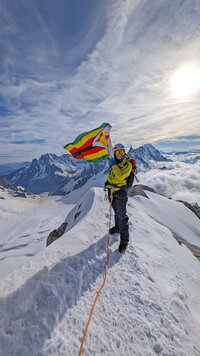
Taken directly from the Peak Performance Program, this slide deck covers the five emotional patterns that most commonly appear at altitude—frustration, fear, overwhelm, self-doubt, and homesickness—and provides practical strategies to navigate each one with clarity and composure.

Emotional Regulation for

A clear, practical PDF guide to acclimatisation, Diamox, sleep, hydration, and oxygen adaptation—designed to help you feel strong, steady, and confident at high altitude.

Always get blisters? This is for you! A downloadable PDF guide to understanding why blisters happen and how to prevent them—including proven strategies, gear recommendations, and on-the-mountain techniques developed through years of expedition experience.
Blister Prevention for Mountaineers & Trekkers

Struggle with breathlessness on steep climbs or at altitude? This PDF guide includes science-backed breathing techniques that are designed to improve respiratory efficiency, lung capacity, and endurance—so you can maintain steady pacing and stay in control on the mountain.
Breathing Techniques for High-Altitude

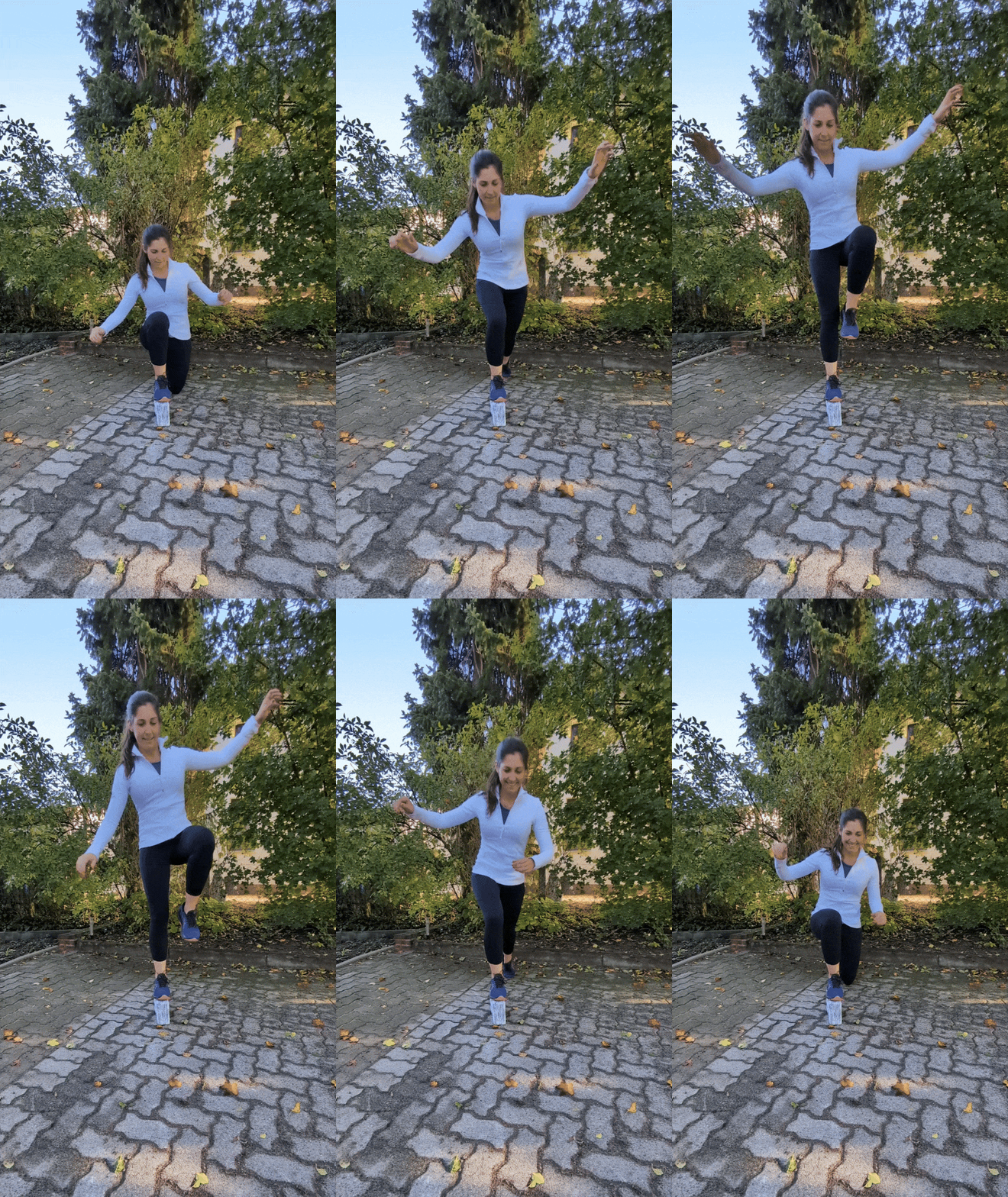


Not sure if you’re training enough? Use our high-altitude training formula to calculate exactly how many hours you should be training per week—based on your mountain, elevation, and current fitness level.
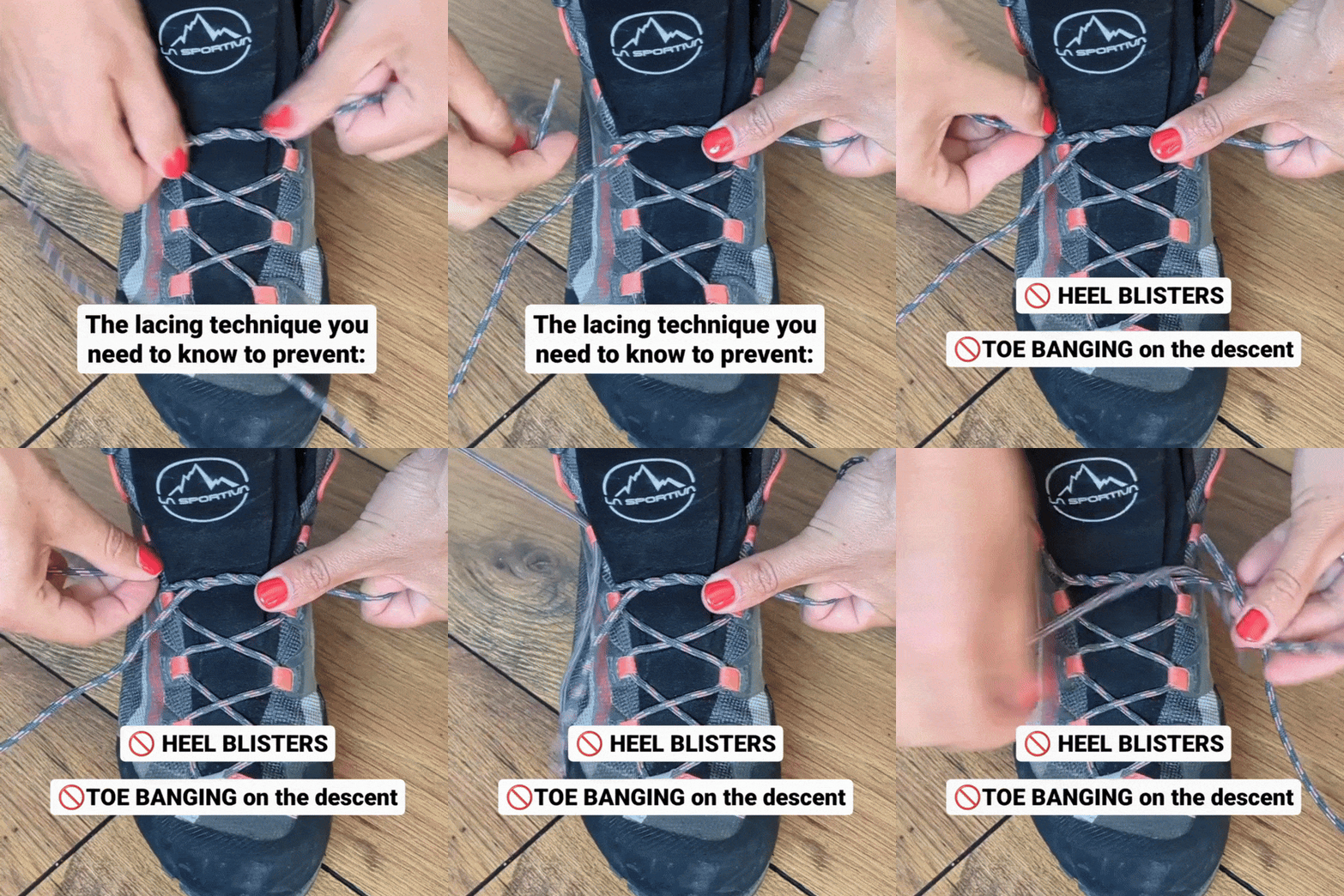
Say goodbye to bruised toenails, heel blisters, and toe-bang. These five lacing techniques show you exactly how to adjust your boots for different terrain—sent straight to your inbox with video walkthroughs so you can start using them straight away.
The Top 5 Boot Lacing Techniques to Protect Your Feet

Nutrition Strategies for Optimal Performance
The 5 Best Leg & Glute Exercises + 15 Mountain-Specific Variations
Visualisation Strategies for Mountaineers & Trekkers
40+ Tips for New Mountaineers & Trekkers
Training Strategies for Load-Carrying Expeditions
Tracking Altitude Symptoms: The AMS Scoring System
Blister Prevention for Mountaineers & Trekkers
Breathing Techniques for High-Altitude
Descent-Proof Knees: Strength & Stability Exercises
8 Ways to Train for Uneven Terrain
The 5 Insider Secrets to Getting Fitter & Faster for Your Next Mountain
The Top 5 Boot Lacing Techniques to Protect Your Feet


